


Imagine it is time to fill a new position, so you initiate the usual hiring process. You define the ideal candidate: required skills, expertise, and talents. You write a job post and start sourcing candidates. You receive applications, go through resumes, and conduct short phone interviews. You invite a few candidates to final interviews and, after some consideration, send an offer to the best fit. The new hire accepts. You start onboarding two weeks later.
You probably recognize that scenario. Because that is what happens in most organizations. The problem is that most organizations skip the preboarding stage, the stage between recruiting and onboarding in the employee life cycle model.
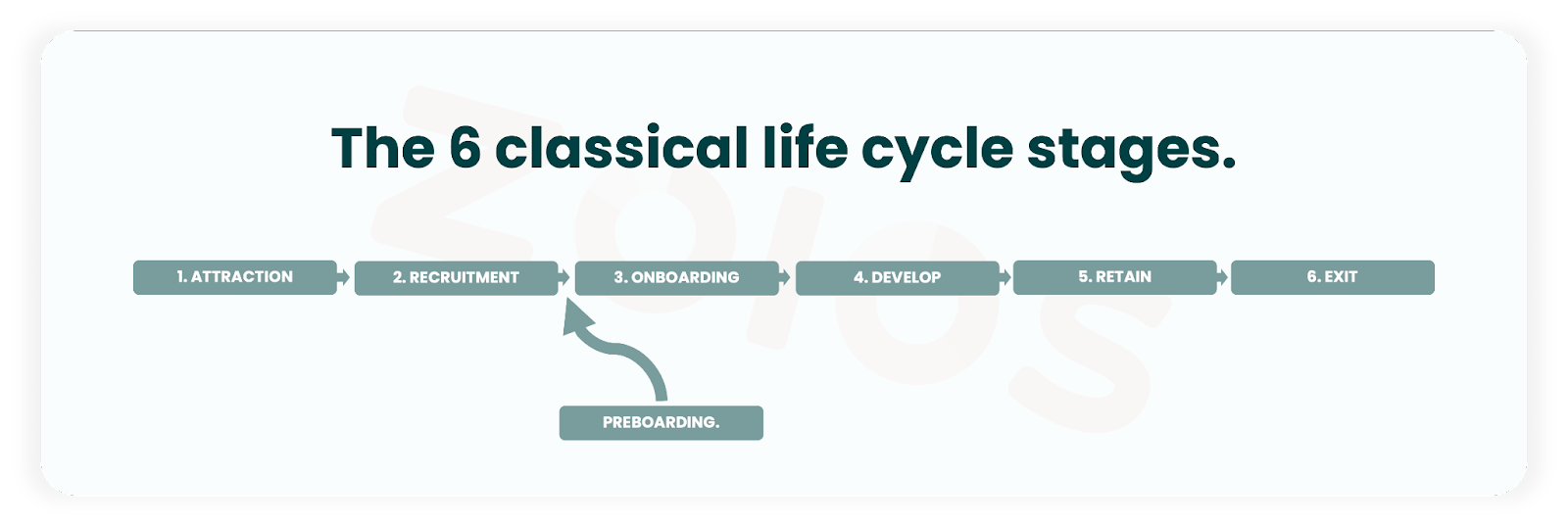
Preboarding is the stage between recruitment and onboarding.
Preboarding: why you should care
Why should skipping preboarding be a problem? The new hire has not even started yet. The problem is that you are missing a unique opportunity to engage and motivate them.
Numbers from Gallup (2022) show that only 32% of US employees are engaged, while 17% are actively disengaged. Why miss an opportunity to improve engagement? Preboarding is great for boosting engagement because new hires tend to be excited to start, and are therefore extra receptive to engagement initiatives.
Imagine you finally found your dream job, and you are about to leave the boring one you have been in for too long. You are full of positive feelings, and your motivation is 10 out of 10. As a manager, recruiter, or HR professional, it is your job to ensure and boost that motivation in the preboarding stage, so your new hire enters onboarding with the highest possible engagement, energy, and excitement.
How the time between offer and onboarding should feel
"Was it really the right decision to accept this job offer? Should I have taken that other offer? Maybe I should just have stayed in my old job, the colleagues there were really nice and fun…"
Don't let your new hire feel like that. Make sure they feel they made the right call as soon as they accept the offer. That keeps engagement high.
Most companies do a bit of preboarding, but it is often unconscious and consists of nothing more than payroll information and a start time. That does not maintain engagement or motivation. So let us look at how your company can do better.
Something soft, something they need, something they want, and something to read
You can use this rhyme as inspiration for what to send the new hire as a small welcome gift.
Something soft. Everyone loves company swag, and branded merch will help your new hire feel they belong. When they wear it, they also boost your employer brand when friends and family ask about it.
Something they need. A nice notebook is a classic. Some people still take notes by hand. If your company offers work-from-home equipment like a monitor or a desk, consider sending it before day one as well.
Something they want. There is no better feeling than receiving something you want for free. Find that little thing everyone just wants: a thermo water bottle, an awesome coffee mug, some delicious chocolate. Add a slight touch of personality. If a new hire doesn't drink alcohol, find non-alcoholic beers or wine instead.
Something to read. This can be literature that represents your company's culture or values, the company handbook, or relevant educational material. Just emphasize that it is optional reading and totally fair if they don't have time to get through it.
Send a welcome email with the org chart
It can be nice for the new hire to receive an email encouraging them to check out the company's org chart. It helps them understand who is who, how many people are in each department, and how each department is structured. That way, getting the lay of the land starts on day zero.
Invite the new hire for a company event or coffee meeting
Instead of just sending things, you can take it a step further and invite them to the office, either for a cup of coffee or for a company event. This can really foster loyalty and make the new hire feel appreciated. Just make sure they don't feel obligated to attend. They might have a tight schedule, and that is fine.
Fill out their calendar before they start
It is terrifying not to know what to expect on your first day, and even more terrifying if no one has a plan for what you should be doing. So fill out your new hire's calendar for the first day, and ideally the first one or two weeks. This eliminates much of the uncertainty new hires feel on day one.
You should not block out their entire day, but make sure it is not their responsibility to know what they should be doing. Add various tasks: stuff to read, people to meet, things to accomplish. Block out some breaks too, so they know breaks are okay. The first days can be very stressful, and breaks are often necessary. Do not, however, send a calendar invite for eight hours of onboarding videos on the first day. Nobody wants that.
Send a handwritten letter
Go the extra mile and send a handwritten letter. It is personal, and most people will be excited to receive one. In a digital age, people rarely get handwritten letters, and it shows you put in extra effort. Send it on behalf of the people the new hire has been in contact with during hiring, or someone they will be working with directly. And make it sincere. A generic text is a no-go.
Spice the welcome email up with a short video greeting
The traditional onboarding email tends to be a bit boring and impersonal. The new hire can easily sense that everyone else has received an almost identical message. Spice it up with a short video greeting from a future colleague who tells why they love working at the company and that they look forward to working together.
Assign the new hire a welcome buddy before they start
Create psychological safety with a buddy program from day one. If you let your new hire know who their buddy will be, they will be more relaxed. Even better if the buddy sends a short video greeting. The buddy is someone the new hire knows they can ask questions, and who can show them around the first couple of days. That helps a lot, since new hires are often afraid to ask their superior certain questions for fear of looking stupid.
Let them know that you care
To sum up: the most important thing is that you let the new employee know you care about them, even before they start. That gets them excited about the new job and increases their engagement before day one. Your initiatives don't have to be perfect. Sometimes it is enough to show you put time and energy into making them feel welcome.
Preboarding checklist
By now it is clear that you can do a lot of things to ensure a great preboarding experience. You don't have to do every one of them, but make sure to do some. The payoff is incredible. And don't forget the formal, necessary preboarding either: payroll information, start date, contract details, and the like.
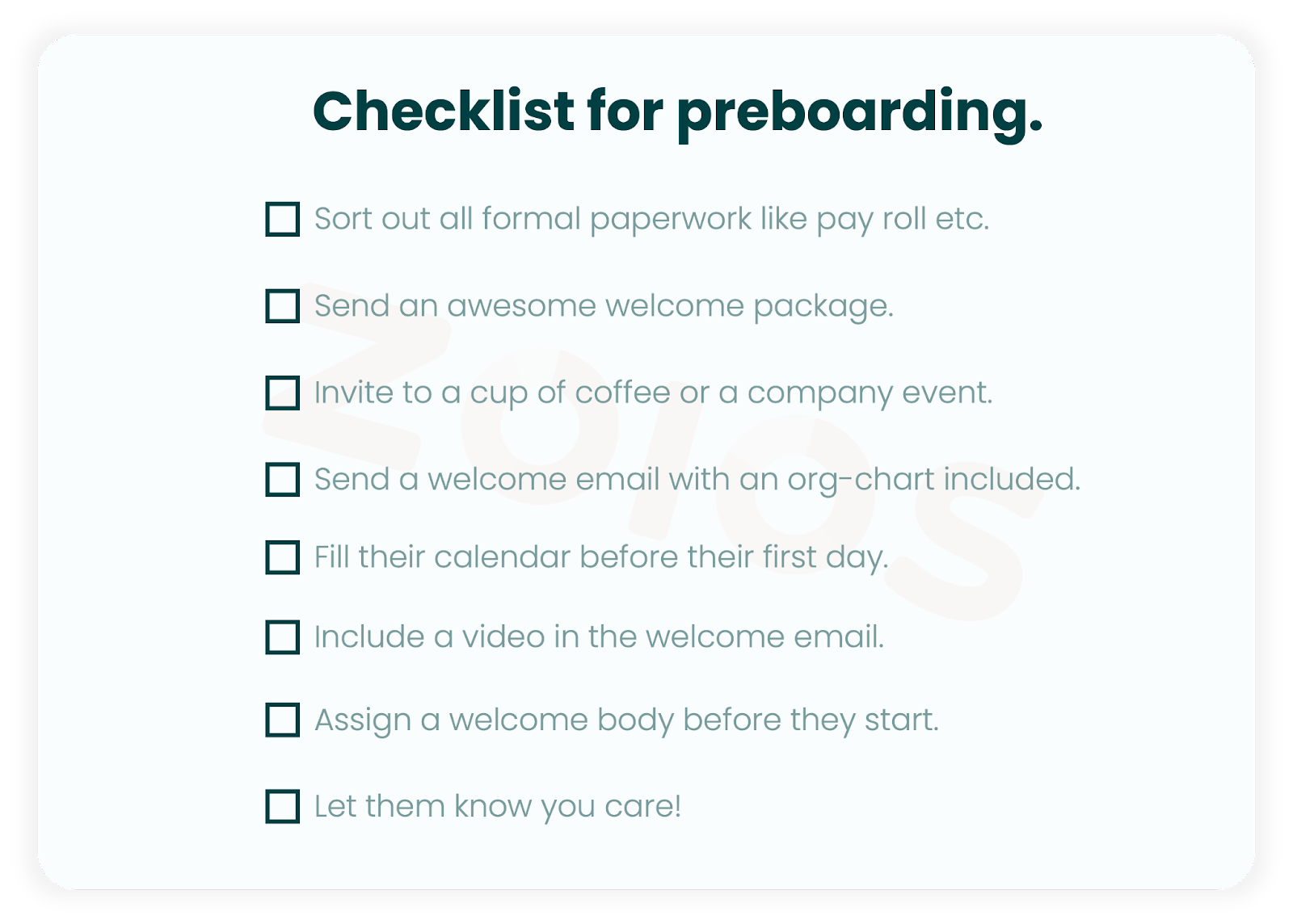
Use this checklist to prepare your preboarding initiatives.